
Monday, July 19, 2010

Saturday, July 3, 2010
Daggett Creek
In the springtime I enjoy a trip upriver, just a bit into the mountains, to Daggett Creek. The dense willows provide habitat for many types of birds. Cyndi and I saw this Cassin's Vireo there, and I remember well how long and hard I searched to see one of these in years past.
 This was also the location I first saw a Warbling Vireo, and a pair-bonded couple was engaged in nest construction at that time. This year I found a completed nest. Both parents were foraging and returning with insects to the nest, so I presume there were young inside the nest. Here's a picture of Mom checking the nest's integrity.
 Of course, the resident Dipper is an old friend by now. I recall seeing it singing at dusk in the cold winter season ... now it is happily traveling up and down the edge of the stream foraging for food. It nearly stepped on my toes as it walked upstream past me.
 Arizona's hummingbirds really set the stage for a year of great hummingbird viewing ... here's the Black-chinned in Idaho!
 The Lazuli Bunting is a colorful sight. I suppose they could be confused with a Bluebird, but the white wing bars help to distinguish them. The females are more of a brown or tan color, and I often wonder what they are, until I remember that they look so different from the males.
 This Calliope Hummingbird was fearless, perching right next to me and scanning the sky for insects to eat. Not everyone realizes that hummingbirds eat quite a few insects for protein to supplement the flower nectar they're famous for consuming.

 This was also the location I first saw a Warbling Vireo, and a pair-bonded couple was engaged in nest construction at that time. This year I found a completed nest. Both parents were foraging and returning with insects to the nest, so I presume there were young inside the nest. Here's a picture of Mom checking the nest's integrity.
 Of course, the resident Dipper is an old friend by now. I recall seeing it singing at dusk in the cold winter season ... now it is happily traveling up and down the edge of the stream foraging for food. It nearly stepped on my toes as it walked upstream past me.
 Arizona's hummingbirds really set the stage for a year of great hummingbird viewing ... here's the Black-chinned in Idaho!
 The Lazuli Bunting is a colorful sight. I suppose they could be confused with a Bluebird, but the white wing bars help to distinguish them. The females are more of a brown or tan color, and I often wonder what they are, until I remember that they look so different from the males.
 This Calliope Hummingbird was fearless, perching right next to me and scanning the sky for insects to eat. Not everyone realizes that hummingbirds eat quite a few insects for protein to supplement the flower nectar they're famous for consuming.
Rainstorms and Rainbows
Cyndi and I decided we would go see some birds in the evening, after work. When we got to the Lucky Peak dam this sight caused us to pull in and join the other gawkers. The reservoir was full and due to the warm weather they were venting the excess water through these great pipes at the base of the dam. At the sunset hour dark storm clouds gathered in the east, and the spray from the great plume of venting water caused a mist to cover the parking area and a rainbow to form.
 It reminded me of some vast waterfall.
 As we walked through the park the actual storm clouds joined in and rain poured down, but with the setting sun beaming through clear skies in the west. What a neat scene as we sought shelter in a covered picnic area.
 This Eastern Kingbird continued to forage for insects between the raindrops, its white terminal tail band glowing in the sunlight.
 And now a natural rainbow formed in the skies over the hills, this one from the storm clouds instead of the dam's vent.
 Then, as quickly as it had arrived, the rain ceased and the birds gathered in the warm sun to shake the moisture from their feathers and catch a quick meal before dark. This one is the Western Tanager.

 It reminded me of some vast waterfall.
 As we walked through the park the actual storm clouds joined in and rain poured down, but with the setting sun beaming through clear skies in the west. What a neat scene as we sought shelter in a covered picnic area.
 This Eastern Kingbird continued to forage for insects between the raindrops, its white terminal tail band glowing in the sunlight.
 And now a natural rainbow formed in the skies over the hills, this one from the storm clouds instead of the dam's vent.
 Then, as quickly as it had arrived, the rain ceased and the birds gathered in the warm sun to shake the moisture from their feathers and catch a quick meal before dark. This one is the Western Tanager.
Wednesday, June 23, 2010
Homeward Bound
Before we started homeward, Cyndi's Dad took a photo of us. Two thousand miles without a shave, and we were still friends.
 On the trip home we saw yet more colorful desert flowers.
 This magnificent Golden Eagle watched us pass through its territory. There's a lot of wide-open space in Nevada.
 One wetland at the corner of an agricultural field hosted this Great Egret.
 And here is yet another type of lizard, this one clinging to a tree. Cyndi thought it might be a Collared Lizard, and it does seem to have a collar-like marking around its neck.
 As the sun set we crossed the border back into Idaho, and this Swainson's Hawk sat high in a tree catching the last warm rays.

Because this blog shows off all my photos I'm never seen, so I thought I'd share this picture Cyndi took of me in Arizona.
 Thanks for reading about our trip. I hope you've enjoyed the story and pictures. Next, I have some exciting things to share from my own corner of the world. There's no place like home!
 On the trip home we saw yet more colorful desert flowers.
One of the two longest days of driving was our marathon journey home from Las Vegas to Boise, with lots of birding stops along the way!
As we drove northward through Nevada toward home we went over a fairly high-elevation area. We got out of the car to look at the Juniper trees and geology and when I turned to look back at the car there was a Lazuli Bunting sitting right on the car's rear-view mirror! Though I didn't get a photo of it sitting on the car, it didn't fly far. Here it is on a road sign.
 This magnificent Golden Eagle watched us pass through its territory. There's a lot of wide-open space in Nevada.
 One wetland at the corner of an agricultural field hosted this Great Egret.
 And here is yet another type of lizard, this one clinging to a tree. Cyndi thought it might be a Collared Lizard, and it does seem to have a collar-like marking around its neck.
 As the sun set we crossed the border back into Idaho, and this Swainson's Hawk sat high in a tree catching the last warm rays.
I saw 163 species of birds on this vacation, in four states. Thirty-nine of them were Life Birds for me and I list the Lifers here in the order I encountered them:
Gambel's Quail
Great-tailed Grackle
Lesser Nighthawk
Mexican Jay
Magnificent Hummingbird
Broad-billed Hummingbird
Hepatic Tanager
Flame-colored Tanager
Bridled Titmouse
Painted Redstart
Rufous-crowned Sparrow
Elf Owl
White-winged Dove
Hooded Oriole
Arizona "Strickland's" Woodpecker
Blue Grosbeak
Verdin
Northern Beardless-Tyrannulet
Gila Woodpecker
Curve-billed Thrasher
Phainopepla
Thick-billed Kingbird
Cassin's Kingbird
Gray Hawk
Canyon Towhee
Violet-crowned Hummingbird
Abert's Towhee
Dusky-capped Flycatcher
Costa's Hummingbird
Vermilion Flycatcher
Chihuahuan Raven
Varied Bunting
Whiskered Screech-Owl
Black Phoebe
Greater Roadrunner
Cactus Wren
Pyrrhuloxia
Black-tailed Gnatcatcher
Harris's Hawk
The entire list of 163 birds seen, with the photos arranged in a slideshow, can be seen at http://cyndiandjonathan.shutterfly.com/.Great-tailed Grackle
Lesser Nighthawk
Mexican Jay
Magnificent Hummingbird
Broad-billed Hummingbird
Hepatic Tanager
Flame-colored Tanager
Bridled Titmouse
Painted Redstart
Rufous-crowned Sparrow
Elf Owl
White-winged Dove
Hooded Oriole
Arizona "Strickland's" Woodpecker
Blue Grosbeak
Verdin
Northern Beardless-Tyrannulet
Gila Woodpecker
Curve-billed Thrasher
Phainopepla
Thick-billed Kingbird
Cassin's Kingbird
Gray Hawk
Canyon Towhee
Violet-crowned Hummingbird
Abert's Towhee
Dusky-capped Flycatcher
Costa's Hummingbird
Vermilion Flycatcher
Chihuahuan Raven
Varied Bunting
Whiskered Screech-Owl
Black Phoebe
Greater Roadrunner
Cactus Wren
Pyrrhuloxia
Black-tailed Gnatcatcher
Harris's Hawk
Because this blog shows off all my photos I'm never seen, so I thought I'd share this picture Cyndi took of me in Arizona.
 Thanks for reading about our trip. I hope you've enjoyed the story and pictures. Next, I have some exciting things to share from my own corner of the world. There's no place like home!
Red Rocks NCA
After a delicious lunch, Cyndi's Dad drove east of Las Vegas, toward the mountains and took us to visit Red Rocks National Conservation Area. Hikers, horseback riders, and rock climbers all enjoy the sandstone formations and mountains beyond. You can see the hiking trails running up the ridge and also along the creek bed.
 The Common Ravens enjoy the landscape, too!
 The wildflowers here were stunning.
 The Orange Globe Mallow grow in my yard. Who would imagine such color in a dry desert environment.
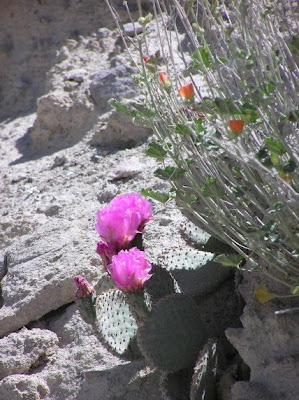
 The cactus flowers, like this Beavertail Cactus were equally brilliant.
 Cyndi used to spend time here as a youngster, so in addition to enjoying the beauty she enjoyed recollections of fun times spent in this area and told me stories of horseback rides and camping trips in these mountains. She was grinning the whole time. Mountains can do that for one's spirit, I've found.
 Here in this wash an Ash-throated Flycatcher came very close to us. By now I was getting more familiar with this sort of flycatcher. Many of the flycatchers do look alike, but where they are found is a clue to their identity. The Ash-throated are more likely to be found in dry desert areas, while the Dusky-capped are more likely to be found in wooded areas.
 This White-throated Swift went by and I was very lucky this time. Usually they're gone before I can raise the camera, but this one did a half-circle around me, staring down at the camera so I had time to focus and take one image before it rocketed off. The swifts are closely related to hummingbirds ... both types of bird have very little use for legs and feet and are aerial acrobats.
 Cyndi pointed out this flower, Purple Sage. I had heard the word before, but had never seen these wonderful flowers on the sagebrush in the desert. What a colorful show!
Springs Preserve
Upon arrival in Las Vegas the first bird I saw was this Northern Mockingbird. It was gathering food and stuffing it into the mouth of a youngster who was tagging along, hungry but not yet motivated enough to forage for its own meals.
 Cyndi's Dad treated us to a visit to Springs Preserve, a nature center and botanical garden and environmental education facility. I had a great time finding birds and enjoying the botanical exhibits.
 This lizard ran across the gravel pathway.
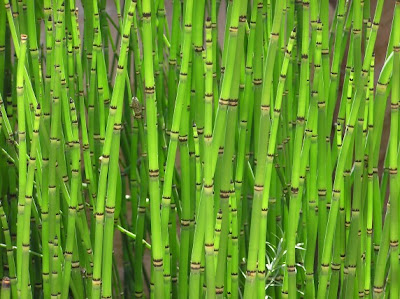
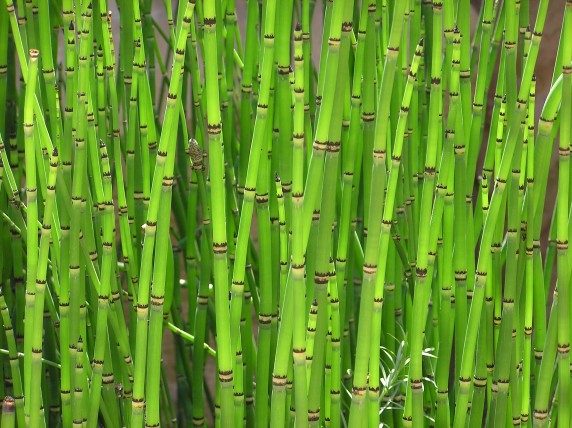
 I thought the Horsetails made a nice pattern. They remind me of bamboo.
 And these yellow flowers caught my eye as well.
 There were warblers in the bushes, like this MacGillivray's.
 From above, the black cap of the Wilson's Warbler stands out.
 We have Western Kingbird in Idaho, too ... and it was nice to recognize a familiar kingbird after trying to sort through so many kinds in Arizona. It is the white outer tail feathers that make it so recognizable.
 There were Verdin here, too.
 And, this Black-chinned Hummingbird posed perfectly against a blue sky. If the light is just right the black gorget will shine a deep dark purple color.

 Cyndi's Dad treated us to a visit to Springs Preserve, a nature center and botanical garden and environmental education facility. I had a great time finding birds and enjoying the botanical exhibits.
 This lizard ran across the gravel pathway.
 I thought the Horsetails made a nice pattern. They remind me of bamboo.
 And these yellow flowers caught my eye as well.
 There were warblers in the bushes, like this MacGillivray's.
 From above, the black cap of the Wilson's Warbler stands out.
 We have Western Kingbird in Idaho, too ... and it was nice to recognize a familiar kingbird after trying to sort through so many kinds in Arizona. It is the white outer tail feathers that make it so recognizable.
 There were Verdin here, too.
 And, this Black-chinned Hummingbird posed perfectly against a blue sky. If the light is just right the black gorget will shine a deep dark purple color.
Driving to Las Vegas
Our next destination was Las Vegas, where we would stay with Cyndi's Dad and second Mom. It was a long drive through the desert, but we stopped a couple of times to enjoy the environment.
The scenery changed from Saguaro to these Joshua Trees.
 Here's an overview.
 And, closer up, you can see many kinds of desert plants grow here.
 Many of the cacti were in bloom, and Cyndi took a lot of photos!
 Here are some of my pictures of the cactus blooms.


This next plant is Bladder Pod, and I later learned that the plant stores carbon dioxide in the pods on the stem, so they can use it whenever they need it.
 There were many kinds of wildflowers along the way.


 Most exciting for me, though, was noticing this bird ... one I had never seen before, the Harris's Hawk. We stopped and tried to walk back to get a better view of it, but it would have none of that and flew off as we walked along the road.

The scenery changed from Saguaro to these Joshua Trees.
 Here's an overview.
 And, closer up, you can see many kinds of desert plants grow here.
 Many of the cacti were in bloom, and Cyndi took a lot of photos!
 Here are some of my pictures of the cactus blooms.

This next plant is Bladder Pod, and I later learned that the plant stores carbon dioxide in the pods on the stem, so they can use it whenever they need it.
 There were many kinds of wildflowers along the way.

 Most exciting for me, though, was noticing this bird ... one I had never seen before, the Harris's Hawk. We stopped and tried to walk back to get a better view of it, but it would have none of that and flew off as we walked along the road.
Subscribe to:
Posts (Atom)

